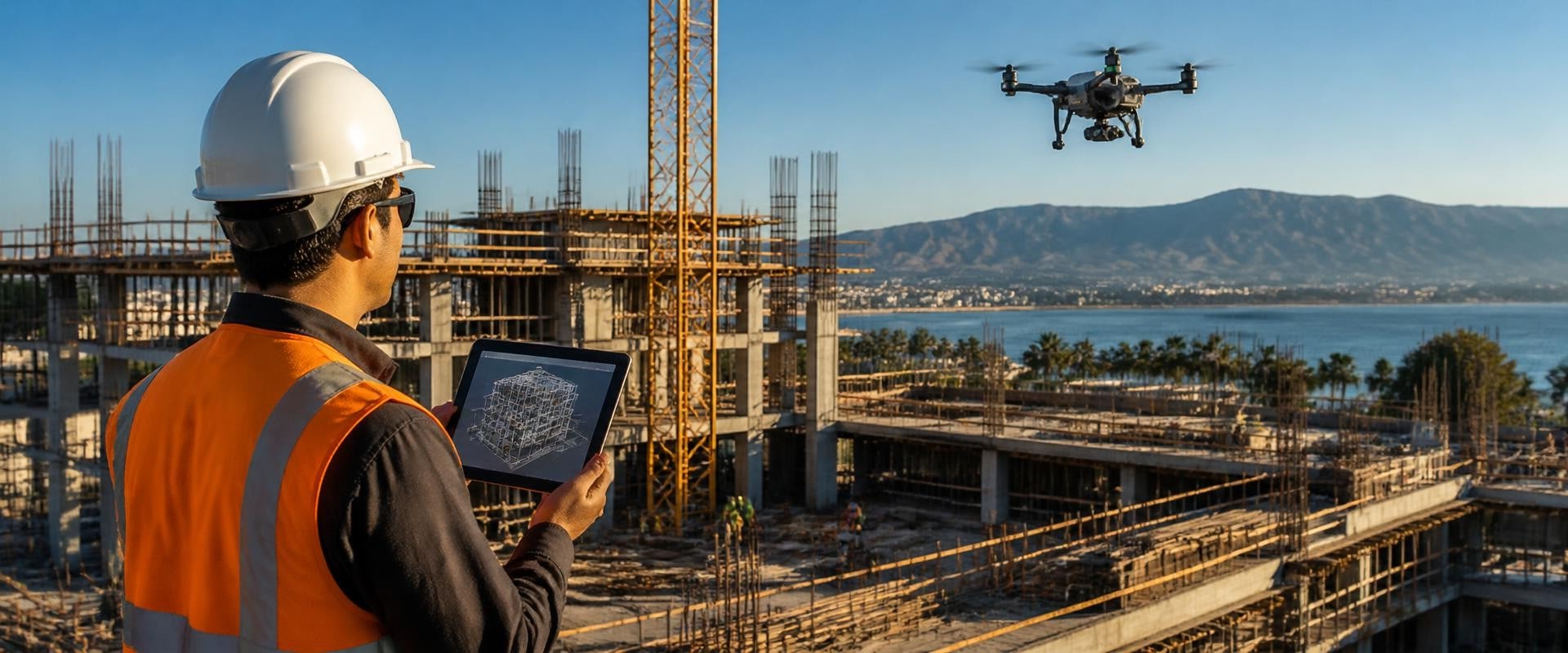
The construction industry has always been at the forefront of innovation, adapting to new challenges and embracing emerging technologiesemerging technologies that redefine the way we build. In California, a state known for its dynamic economy and commitment to sustainability, the adoption of cutting-edge tools and practices is transforming construction processes like never before. As we delve into the latest advancements, it becomes clear that these emerging technologies are not just enhancements but pivotal shifts that promise to revolutionize the entire sector. From artificial intelligence and robotics to augmented reality and 3D printing, the possibilities are endless. These innovations are not only improving efficiency and safety on job sites but also contributing to a more sustainable future. In this article, we will explore the various are not just enhancements but pivotal shifts that promise to revolutionize the entire sector. From artificial intelligence and robotics to augmented reality and 3D printing, the possibilities are endless. These innovations are not only improving efficiency and safety on job sites but also contributing to a more sustainable future. In this article, we will explore the various emerging technologies in construction that are making waves in California.
We aim to provide insights into how these advancements are reshaping traditional practices, enhancing collaboration among stakeholders, and ultimately leading to smarter, greener buildings. Join us as we uncover the transformative potential of technology in one of the most essential industries of our time. The construction industry in California is undergoing a seismic shift, driven by emerging technologies that are reshaping how projects are conceived, executed, and managed. As the demand for sustainable and efficient construction practices grows, it becomes increasingly vital for homeowners, contractors, and industry stakeholders to remain informed about these advancements. The integration of technology not only streamlines processes but also enhances safety and ensures compliance with stringent state regulations. One of the most significant advancements in construction is Building Information Modeling (BIM).
BIM is a digital representation of the physical and functional characteristics of a facility. In California, where projects often face complex regulations and environmental concerns, BIM allows for better visualization and planning. This technology facilitates collaboration among architects, engineers, and contractors from the initial design phase through to construction and maintenance. For example, the Salesforce Tower in San Francisco utilized BIM extensively to manage its intricate design and ensure compliance with local building codes. Another innovative technology making waves in California's construction scene is the use of drones.
Drones are revolutionizing site surveys, inspections, and monitoring. They provide real-time data collection that improves project oversight and reduces the time spent on manual inspections. Construction companies like Swinerton have successfully used drones for topographic mapping and progress tracking on large-scale projects, such as the San Diego International Airport expansion. This not only enhances efficiency but also aids in obtaining necessary permits by providing accurate, up-to-date information to regulatory bodies.
3D printing
is also emerging as a game-changer in the construction industry.This technology allows for the rapid prototyping of building components, reducing material waste and labor costs. In California, companies like ICON are pioneering 3D-printed homes that can be produced in a fraction of the time compared to traditional methods. These homes not only meet state regulations but also provide affordable housing solutions in areas facing severe housing shortages. The use of 3D printing aligns with California's push for sustainability by minimizing environmental impact through reduced resource consumption. Additionally, prefabrication is becoming increasingly popular as a method to enhance efficiency and reduce on-site construction time.
By manufacturing components off-site in controlled environments, builders can ensure higher quality and safety standards while also adhering to state regulations more easily. Projects like the Housing Authority of Los Angeles' modular housing initiative showcase how prefabrication can address housing needs while complying with local building codes. These modular units are assembled quickly on-site, making them a viable solution for California’s urgent housing crisis. The integration of these emerging technologies not only improves project delivery but also influences labor requirements within the construction sector. As automation and advanced technologies become commonplace, there is a growing need for skilled workers who can operate sophisticated equipment and software.
Contractors may find that their licensing requirements evolve to include knowledge of these new tools and techniques, pushing them to adapt their training programs accordingly. In conclusion, embracing emerging technologies is essential for stakeholders across California's construction landscape. From BIM to drones, 3D printing, and prefabrication, these innovations offer tangible benefits such as enhanced efficiency, improved safety, and better compliance with state regulations. By staying informed about these advancements, homeowners and contractors can position themselves at the forefront of a rapidly evolving industry.
Building Information Modeling (BIM)
Building Information Modeling (BIM) is a revolutionary approach to construction that integrates digital technology into the planning, design, and management phases of a project. By creating a 3D digital representation of a building, BIM allows stakeholders to visualize every aspect of the structure before any physical work begins.This enhanced project visualization enables architects, engineers, and contractors to collaborate more effectively, ensuring that everyone involved has a clear understanding of the project goals and specifications. One of the most significant advantages of BIM is its ability to improve coordination among various teams. With BIM, all parties can access the same model, which reduces misunderstandings and miscommunications that often lead to costly delays and rework. By identifying potential conflicts in the design phase—such as clashes between plumbing and electrical systems—BIM allows for timely adjustments, saving both time and money. Furthermore, BIM enhances overall efficiency in construction projects. The detailed information contained within a BIM model can streamline workflows, optimize resource allocation, and improve scheduling.
As a result, construction projects can be completed faster and with fewer errors. Additionally, using BIM can help ensure compliance with California's stringent building codes and regulations, making it an essential tool for stakeholders in the construction industry.
Regulatory Considerations
As emerging technologies continue to reshape the construction landscape in California, it is crucial for industry stakeholders to navigate the regulatory environment effectively. Understanding key state regulations that impact the adoption of these technologies is essential for ensuring compliance and facilitating innovation. One of the primary considerations is the California Building Standards Code, which sets forth regulations that govern construction practices, materials, and safety standards. Familiarity with this code is vital for contractors and developers looking to integrate new technologies into their projects.Additionally, local jurisdictions may impose their own regulations, which can vary significantly across regions. Another important aspect is the permitting process. Many emerging technologies, such as prefabrication and modular construction, may require specific permits that differ from traditional construction methods. Stakeholders must be aware of these requirements to avoid potential delays and ensure that their projects proceed smoothly. Moreover, California has been at the forefront of sustainability initiatives, and emerging technologies often intersect with environmental regulations. Compliance with the California Environmental Quality Act (CEQA) is essential when implementing new construction practices, particularly those that may impact local ecosystems. In summary, a thorough understanding of state regulations and permit requirements is imperative for successfully adopting emerging technologies in construction.
By staying informed and proactive, homeowners, contractors, and other stakeholders can harness these advancements while adhering to necessary legal frameworks.
3D Printing: A Game Changer
3D printing is emerging as a transformative force in the construction industry, particularly in California, where innovation is at the forefront of building practices. This technology enables the creation of complex structures directly from digital models, significantly altering traditional building methods. One of the most significant advantages of 3D printing is its ability to revolutionize material usage. By utilizing advanced materials, such as concrete and biodegradable composites, 3D printing minimizes the need for excess resources. This precise method allows for the exact amount of material required for each component, effectively reducing waste during the construction process. Moreover, the environmental benefits are noteworthy.Traditional construction methods often lead to substantial material waste due to cutting and shaping processes. In contrast, 3D printing generates minimal surplus material, aligning with California's stringent sustainability goals and regulations. As a result, builders can not only reduce their ecological footprint but also contribute to a more sustainable future. In addition to efficiency and sustainability, 3D printing enhances safety on construction sites. With fewer workers required for manual labor and less heavy machinery needed, the potential for accidents decreases significantly.
This shift towards automation can lead to safer work environments while allowing skilled workers to focus on more complex tasks that require human oversight. As California continues to embrace technological advancements in construction, 3D printing stands out as a pivotal innovation that not only streamlines processes but also promotes a more sustainable and safe building industry.
Prefabrication and Modular Construction
Prefabrication and modular construction are revolutionizing the way buildings are designed and constructed in California. By allowing components of a structure to be built off-site in controlled environments, these methods significantly reduce construction time and costs while maintaining high standards of quality. One of the key advantages of prefabrication is the efficiency it brings to the construction process. Traditional on-site construction can be hindered by weather delays and logistical challenges. In contrast, prefabricated elements are manufactured in a factory setting, where conditions can be optimized for quality control.This leads to faster assembly times once the components arrive at the construction site. Moreover, modular construction promotes better resource management. Since modules are produced in bulk, material waste is minimized, contributing to more sustainable building practices. The reduction in waste not only lowers overall costs but also aligns with California's stringent environmental regulations. Additionally, the use of prefabricated components allows for improved safety on job sites. With less time spent on-site for assembly, workers face fewer risks associated with traditional construction methods.
This focus on safety can lead to a decrease in accidents, ultimately benefiting contractors and stakeholders in the industry. In summary, prefabrication and modular construction are transformative technologies that provide substantial benefits by reducing time and costs while ensuring high-quality outputs. As these methods continue to gain traction, they will play a crucial role in the future of construction in California.
Drones in Construction
Drones have emerged as a game-changing technology in the construction industry, particularly in California, where innovative practices are essential for staying competitive. These unmanned aerial vehicles (UAVs) are revolutionizing the way construction sites are surveyed, monitored, and managed. One of the primary roles of drones in construction is for site surveying. Traditional surveying methods can be time-consuming and labor-intensive, but with drones, contractors can quickly capture high-resolution images and data of the site from various angles.This not only speeds up the surveying process but also increases accuracy, allowing for better planning and resource allocation. Additionally, drones are invaluable for monitoring construction progress. By providing real-time aerial footage, stakeholders can keep track of the project’s status without the need for frequent on-site visits. This capability is especially useful for large or remote sites, where accessibility may be an issue. Regular drone surveys can help identify any delays or issues early on, enabling timely interventions to keep projects on schedule. Moreover, drones play a crucial role in ensuring compliance with safety standards.
By conducting aerial inspections, construction managers can assess safety protocols without putting workers at risk. Drones can identify potential hazards such as unsafe scaffolding or equipment placement from a safe distance, allowing for swift corrective actions. As California continues to prioritize safety regulations in construction, the use of drones will likely become even more prevalent. In summary, the integration of drones into construction practices not only enhances efficiency but also promotes safer and more compliant work environments. For homeowners, contractors, and stakeholders alike, understanding the benefits of this technology is vital in navigating the ever-evolving landscape of the construction industry.
Future Trends in California Construction
The construction industry in California is on the brink of significant transformation, driven by emerging technologies that promise to reshape how buildings are designed, constructed, and maintained.One of the most compelling trends on the horizon is the integration of sustainability initiatives. As the state grapples with climate change and environmental concerns, construction practices are increasingly focusing on reducing carbon footprints and promoting energy efficiency. This shift not only meets regulatory demands but also aligns with the growing preference among homeowners and businesses for environmentally friendly solutions. In parallel, the rise of smart building technologies is set to revolutionize how we interact with our living and working spaces. These technologies utilize IoT (Internet of Things) devices to create interconnected systems that enhance efficiency and comfort.
Imagine buildings that can adjust lighting and temperature based on occupancy or energy management systems that optimize energy usage in real-time. Such advancements not only improve the quality of life for occupants but also contribute to overall sustainability goals. Furthermore, advancements in construction materials, such as self-healing concrete and advanced prefabrication techniques, are expected to gain traction. These innovations will not only reduce waste and labor costs but also expedite project timelines, providing a competitive edge to contractors who adopt them early. Lastly, as artificial intelligence and machine learning continue to evolve, their applications in construction project management will become more sophisticated. Predictive analytics can help foresee potential project delays or budget overruns, allowing stakeholders to make informed decisions that mitigate risks. In conclusion, the future of construction in California is bright, with a wealth of innovations poised to enhance efficiency, sustainability, and safety.
Stakeholders who remain vigilant and adapt to these trends will be well-positioned to thrive in an ever-evolving market. In conclusion, the construction industry in California is undergoing a remarkable transformation driven by emerging technologies. As discussed, innovations such as Building Information Modeling (BIM), drones, 3D printing, and prefabrication are not only enhancing efficiency but also improving safety and regulatory compliance. It is imperative for homeowners, contractors, and industry stakeholders to recognize the importance of embracing these advancements. By staying informed about the latest trends and integrating these technologies into their projects, businesses can significantly enhance their operational capabilities and competitive edge. The future of construction in California is bright, and those who adapt will undoubtedly reap the benefits of these revolutionary changes.